How to Choose the Right Cucumber Trellis for Your Garden?
How to Choose the Right Cucumber Trellis for Your Garden?
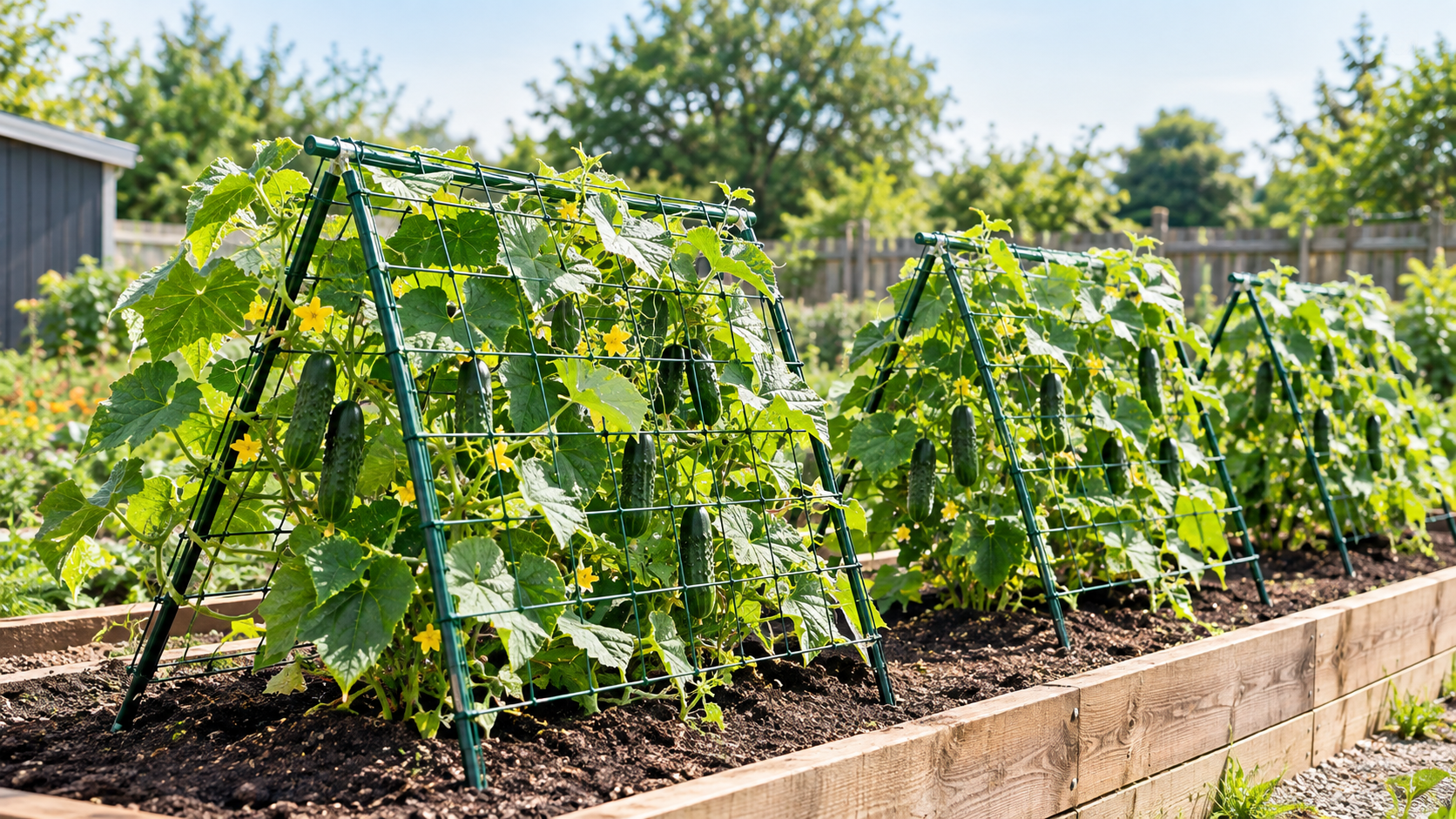
Cucumbers are naturally climbing plants. When given a suitable support, their vines can grow upward instead of spreading across the ground. A well-designed cucumber trellis can help save garden space, keep developing fruit away from the soil, and make harvesting easier.
But not every cucumber trellis is suitable for every garden.
The right choice depends on your cucumber variety, available space, growing method, trellis material, height, stability, and how you plan to harvest.
In this guide, we will explain how to choose the right cucumber trellis, compare common trellis types, and show what to consider before buying or installing one.
Why Use a Cucumber Trellis?
Cucumber plants can grow across the ground, but many gardeners choose to grow them vertically.
A trellis gives climbing vines a structure to attach to and can provide several practical benefits.
1. Save Garden Space
Cucumber vines can spread over a considerable area when left on the ground.
Growing vertically allows the vines to use upward space instead of occupying the entire garden bed. This can be especially useful for raised beds, small gardens, patios, and intensive vegetable gardens.
2. Keep Cucumbers Off the Ground
When cucumbers grow directly on soil, developing fruit can come into contact with wet soil.
Growing vertically allows the fruit to hang from the vine instead. Extension gardening resources commonly recommend trellising cucumbers and other vining crops when space and growing conditions make it practical.
3. Make Harvesting Easier
Finding cucumbers among a large mass of ground-growing vines can be difficult.
A vertical trellis keeps more of the plant structure visible, making it easier to inspect the vines and locate mature fruit.
4. Improve Plant Organization
A trellis gives cucumber vines a defined growing direction.
Instead of allowing vines to spread randomly through pathways or neighboring plants, gardeners can train them upward along a dedicated support.
5. Create a More Organized Garden
A metal garden trellis can also become part of the overall structure of a vegetable garden.
For garden centers, landscapers, and wholesale buyers, a durable metal cucumber trellis can provide a reusable solution for customers who grow climbing vegetables year after year.
What Should You Consider When Choosing a Cucumber Trellis?
Before choosing a trellis, consider these five factors:
Cucumber variety → Trellis height → Garden space → Material → Stability
Let's look at each one.
1. Choose a Trellis Based on Your Cucumber Variety
Not all cucumbers grow in exactly the same way.
Vining Cucumbers
Vining varieties produce long stems and tendrils that naturally search for something to climb.
These varieties are generally well suited to:
-
Vertical trellises
-
A-frame trellises
-
Wire mesh supports
-
String or netting systems
Bush or Compact Cucumbers
Bush-type cucumbers tend to remain more compact.
They may require less support than long-vining varieties, and in some gardens a smaller cage or support structure may be sufficient.
This is why the first question when selecting a cucumber trellis should be:
How does the cucumber variety grow?
2. Choose the Right Trellis Height
Trellis height is another important consideration.
A support that is too short may become completely covered by the plant before the growing season ends.
For many vining cucumber varieties, gardeners commonly use supports around 5–6 feet tall, although the ideal height depends on the variety and growing environment. Recent gardening guides also emphasize matching trellis height to the expected vine growth rather than choosing one universal dimension.
As a general starting point:
| Cucumber Type | Suggested Support |
|---|---|
| Compact / bush varieties | Shorter support |
| Pickling cucumbers | Medium-height support |
| Standard vining cucumbers | About 5–6 ft |
| Vigorous climbing varieties | Taller support |
These are general guidelines rather than fixed specifications. Always consider the mature size of the specific variety.
3. Consider the Available Garden Space
Your garden layout can determine which trellis design makes the most sense.
Small Garden
For a small garden or raised bed, a vertical panel trellis can make efficient use of limited space.
The plant grows upward while the ground area remains relatively compact.
Raised Beds
A narrow vertical trellis can be positioned along the edge of a raised bed.
This allows the cucumber vines to climb without taking over the entire planting area.
Larger Vegetable Gardens
For larger gardens, an A-frame or larger metal trellis system can provide support on both sides.
This can create a larger growing surface while keeping the planting area organized.
Garden Paths and Boundaries
A trellis can also be positioned along the edge of a garden, where it can function as both a plant support and a visual garden structure.
4. Choose the Right Trellis Material
The material of a cucumber trellis affects its durability, appearance, weight, and intended use.
Wood
Wooden trellises can provide a natural appearance and work well in many home gardens.
However, outdoor durability depends on the type and treatment of the wood.
Plastic
Plastic supports are lightweight and easy to handle.
They can be suitable for temporary or lightweight applications, but the required strength depends on the size of the plant and the structure.
Garden Netting
Netting is lightweight and flexible.
It can work well when properly tensioned and securely attached to a stable frame.
Metal
Metal garden trellises offer a combination of strength, durability, and reusability.
For commercial garden products and wholesale applications, metal is particularly useful when customers expect a support structure to withstand repeated outdoor use.
A metal cucumber trellis can also be designed in different shapes, sizes, wire diameters, finishes, and configurations depending on the application.
5. Stability Is Just as Important as Height
A tall trellis is not useful if it becomes unstable once the cucumber vines grow.
As the plant develops, the trellis needs to support:
-
Growing vines
-
Leaves
-
Developing fruit
-
Wind exposure
-
The weight of the overall plant
Therefore, when evaluating a cucumber trellis, look beyond the height.
Pay attention to:
Frame strength
Wire or tube diameter
Base design
Connection points
Ground anchoring
Overall structure
A good cucumber support should remain stable throughout the growing season.
Cucumber Trellis vs. Other Support Methods
There are several ways to support cucumber plants.
| Support Method | Best For | Main Advantage |
|---|---|---|
| Cucumber Trellis | Vining cucumbers | Organized vertical growth |
| A-Frame Trellis | Larger growing areas | Support on both sides |
| Garden Netting | Lightweight vines | Flexible and lightweight |
| Plant Cage | Compact plants | Simple installation |
| Garden Stake | Individual plants | Simple and inexpensive |
| Fence | Existing structures | Uses available space |
The best choice depends on the plant and growing environment.
For example, a small bush cucumber may not need the same structure as a vigorous vining variety.
How to Install a Cucumber Trellis
Installing the support before the vines become large is usually easier than trying to install it after the plant has already spread.
Step 1: Choose the Location
Place the trellis where the cucumber plant can easily reach it.
Make sure the location does not interfere with pathways or other crops.
Step 2: Install the Support
Secure the base firmly in the soil or attach the trellis to a stable structure.
The support should not wobble easily when pushed from different directions.
Step 3: Plant the Cucumbers
Plant the cucumber close enough to the support that young vines can reach it naturally.
Step 4: Guide the Young Vines
As the vines begin growing, gently guide them toward the trellis.
Cucumber tendrils naturally wrap around nearby structures, so gardeners usually do not need to tie every part of the plant.
If tying is necessary, use soft ties and avoid tightly wrapping the stem.
Step 5: Check the Plant Regularly
During periods of rapid growth, check the vines regularly.
Redirect any shoots that have grown away from the support and make sure the trellis remains stable.
What Makes a Good Metal Cucumber Trellis?
If you are purchasing cucumber trellises for a garden center, landscaping project, farm supply business, or wholesale distribution, product construction becomes particularly important.
Consider the following:
Durable Material
Galvanized or coated metal can provide better resistance to outdoor conditions than untreated materials.
Suitable Wire Diameter
The wire should be strong enough for the intended plant and structure without making the product unnecessarily heavy.
Appropriate Mesh or Opening Size
Openings should allow cucumber tendrils to reach through and make it reasonably easy for gardeners to inspect and harvest the fruit.
Stable Design
The support should have a practical structure for installation and remain stable when loaded with mature vines.
Reusable Construction
A reusable metal trellis can be more attractive to customers looking for a long-term garden solution.
Common Cucumber Trellis Mistakes
Choosing a trellis is not only about selecting the right product. Installation and use also matter.
Mistake 1: Choosing a Support That Is Too Short
A small support may quickly become covered by vigorous vines.
Consider the mature growth of the variety before choosing the height.
Mistake 2: Installing a Weak Structure
A cucumber plant may look lightweight when it is young.
Once the vines become dense and produce fruit, the structure experiences much more load.
Mistake 3: Installing the Trellis Too Late
Trying to place a trellis underneath an already established cucumber vine can disturb the plant.
Install the support before planting or while the vines are still young whenever possible.
Mistake 4: Ignoring Wind
A large cucumber canopy can act like a sail.
Freestanding trellises should be positioned and anchored according to the local growing conditions.
Mistake 5: Choosing Only Based on Price
The cheapest support is not necessarily the most suitable option.
For long-term use, buyers should consider material, construction, stability, finish, packaging, shipping cost, and expected service life.
Cucumber Trellis Buying Guide for Wholesale Buyers
For garden centers, distributors, importers, and retailers, selecting a cucumber trellis involves more than simply choosing a popular shape.
Before placing a bulk order, consider:
Product Specifications
Ask for:
-
Overall dimensions
-
Wire diameter
-
Mesh size
-
Material
-
Surface treatment
-
Product weight
-
Packaging method
-
Carton dimensions
Customization
For private-label or retail programs, buyers may also need:
-
Custom sizes
-
Custom colors
-
Product labels
-
Retail packaging
-
Barcodes
-
Instruction cards
-
OEM/ODM services
Shipping Efficiency
Garden supports can be relatively large compared with their weight.
Therefore, packaging design can have a significant effect on transportation costs.
Foldable or stackable designs may offer advantages for storage and shipping depending on the product structure.
Frequently Asked Questions
Do cucumbers need a trellis?
Not every cucumber requires a trellis. Bush varieties can remain relatively compact, while many vining varieties benefit from a vertical support system.
How tall should a cucumber trellis be?
A support around 5–6 feet is a common starting point for many vining cucumbers, but the ideal height depends on the variety and growing conditions.
What is the best material for a cucumber trellis?
There is no single best material for every garden. Wood, plastic, netting, and metal can all work. Metal is a practical choice when durability, strength, and repeated outdoor use are priorities.
Can I use a tomato cage for cucumbers?
A tomato cage can support some compact cucumber plants, but it may not provide enough height or growing surface for vigorous vining varieties.
Can cucumbers grow on a metal trellis?
Yes. Cucumber tendrils naturally climb and wrap around suitable structures. A metal trellis can provide a durable framework for vertical growth.
Should I install the trellis before planting cucumbers?
In most cases, installing the support before planting or while the plants are young makes training easier and reduces the risk of disturbing established roots and vines.
Final Thoughts
Choosing the right cucumber trellis is mainly about matching the support to the plant and the growing environment.
Before buying, consider:
1. Cucumber variety
2. Expected vine growth
3. Trellis height
4. Available garden space
5. Material and durability
6. Stability and anchoring
7. Installation and harvesting requirements
For home gardeners, a simple vertical support may be enough. For garden centers, landscapers, and wholesale buyers, a durable metal cucumber trellis can provide a reusable solution for customers growing climbing vegetables.
Looking for metal cucumber trellises or custom garden plant supports for wholesale? Contact us to discuss available sizes, materials, finishes, packaging, and OEM/ODM options.
Explore our Garden Plant Support products →
Related Products:
-
Cucumber Trellis
-
Plant Support Hoops
-
Tomato Cage
-
Peony Cage
Related Articles:
-
How to Choose the Best Tomato Cage for Your Business
-
How to Support Tomato Plants